

Application guide
Geotextile for basins and geomembrane protection
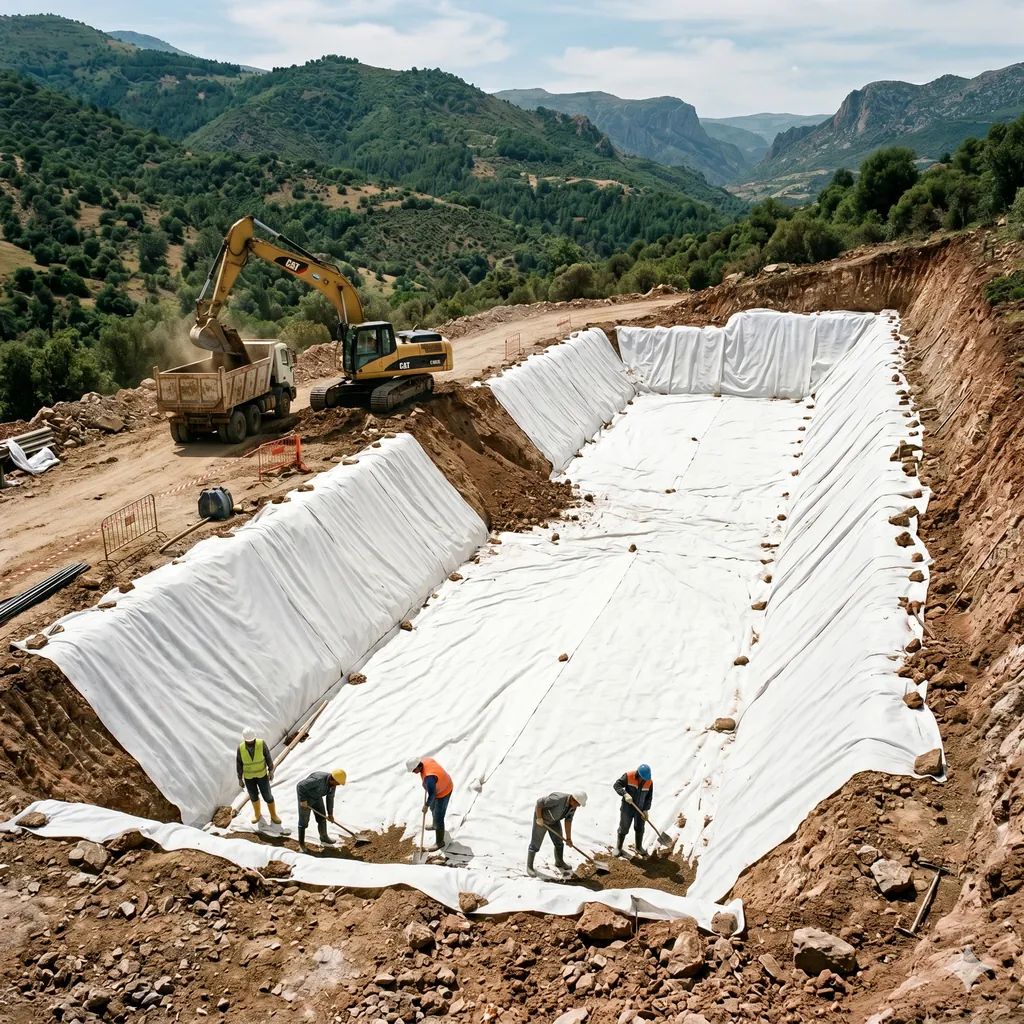
In a basin, reservoir or landfill, the geomembrane provides the waterproofing. The non-woven geotextile protects it against stones and puncturing.
Why protect a geomembrane?
A geomembrane is a thin sheet. Laid directly on the soil or covered with materials, it can be punctured by stones, roots or rough spots in the subgrade. A single puncture is enough to cause a leak.
A heavy non-woven geotextile forms a cushion between the geomembrane and the soil, and between the geomembrane and the cover materials. It spreads pressure and absorbs impacts.
What weight to protect a geomembrane?
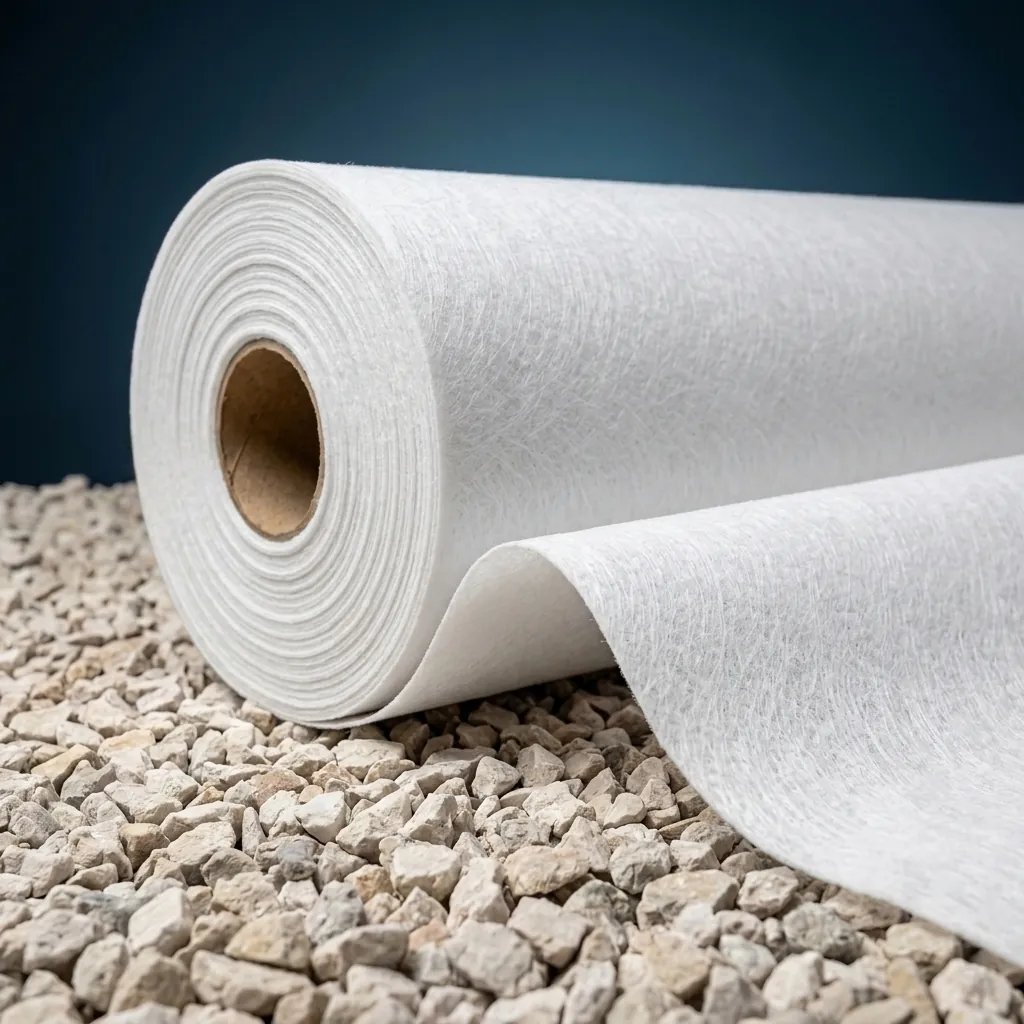
A non-woven geotextile from 400 g/m² is generally used. The stonier the subgrade and the heavier the loads, the higher the weight must be, up to 1200 g/m² for the most demanding structures. The exact weight is set by the project design.
Installation in a basin
- Trim and compact the bottom and slopes, remove stones and roots.
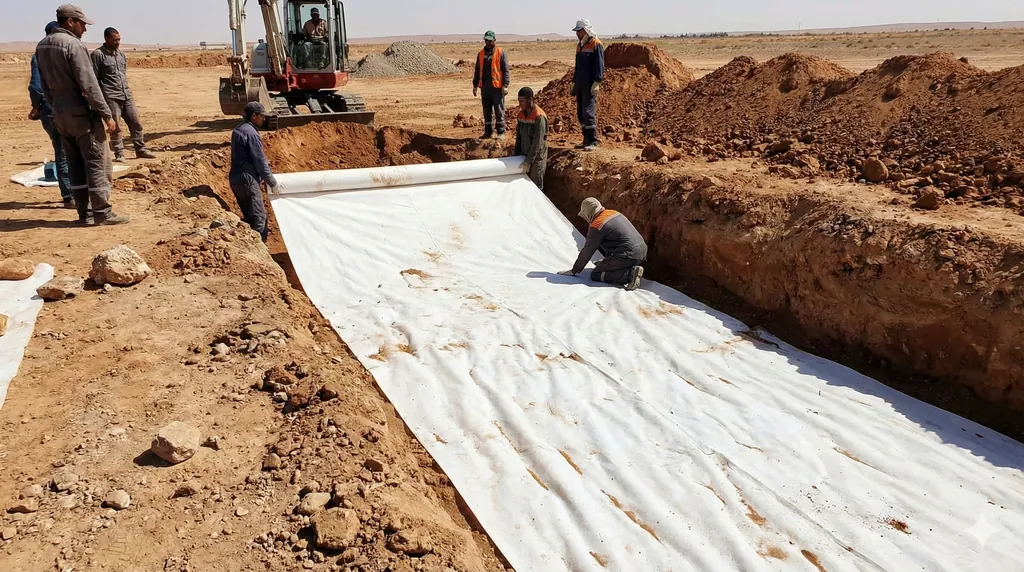
- Unroll the geotextile over the bottom and slopes, with an overlap of at least 30 cm between strips.
- Anchor the geotextile at the top of the slope, in an anchor trench.
- Lay the geomembrane on the geotextile, then weld its strips.
- If the geomembrane is covered, lay a second layer of geotextile before the cover materials.
Benefits of protection geotextile
- Protects geomembranes against puncture.
- Reduces the risk of leaks and extends the life of the waterproofing.
- Rot-proof and resistant to aggressive soils.
- Light, easy to cut and quick to lay.
Suitable products
Frequently asked questions
Which geotextile under a geomembrane?
A heavy needle-punched non-woven geotextile, generally from 400 g/m². It is laid under the geomembrane, and also on top when it is covered with materials.
Does the geotextile replace the geomembrane?
No. Geotextile is permeable: it protects the geomembrane but does not make it watertight. The geomembrane is what holds the water.
Quote request
Have a project?
Tell us what you need and let’s discuss the right solution.