

Application guide
Geotextile for roads and capping layers
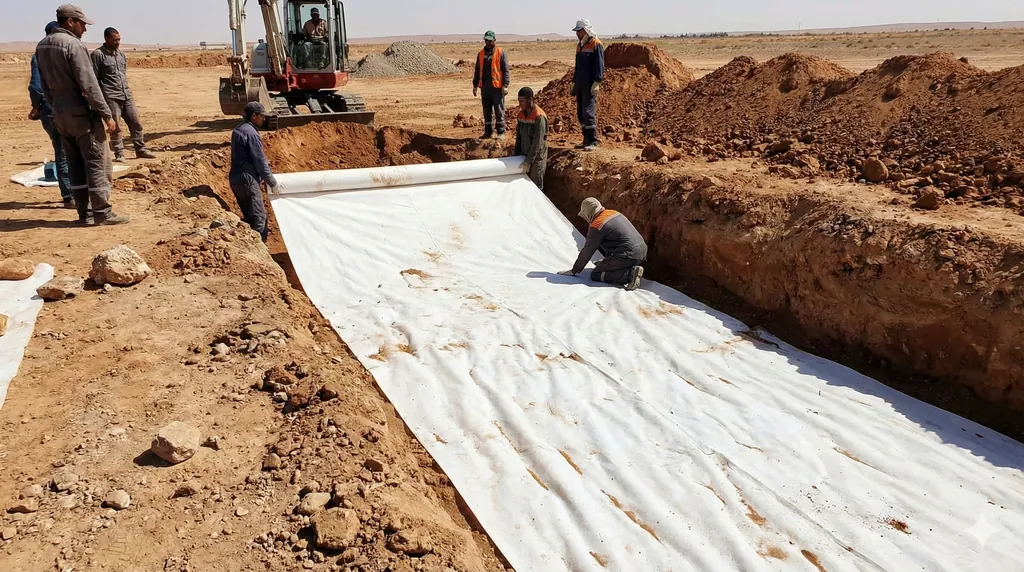
Under a road, track or platform, the geotextile stops the subgrade from mixing with the aggregates. The pavement keeps its bearing capacity and lasts longer.
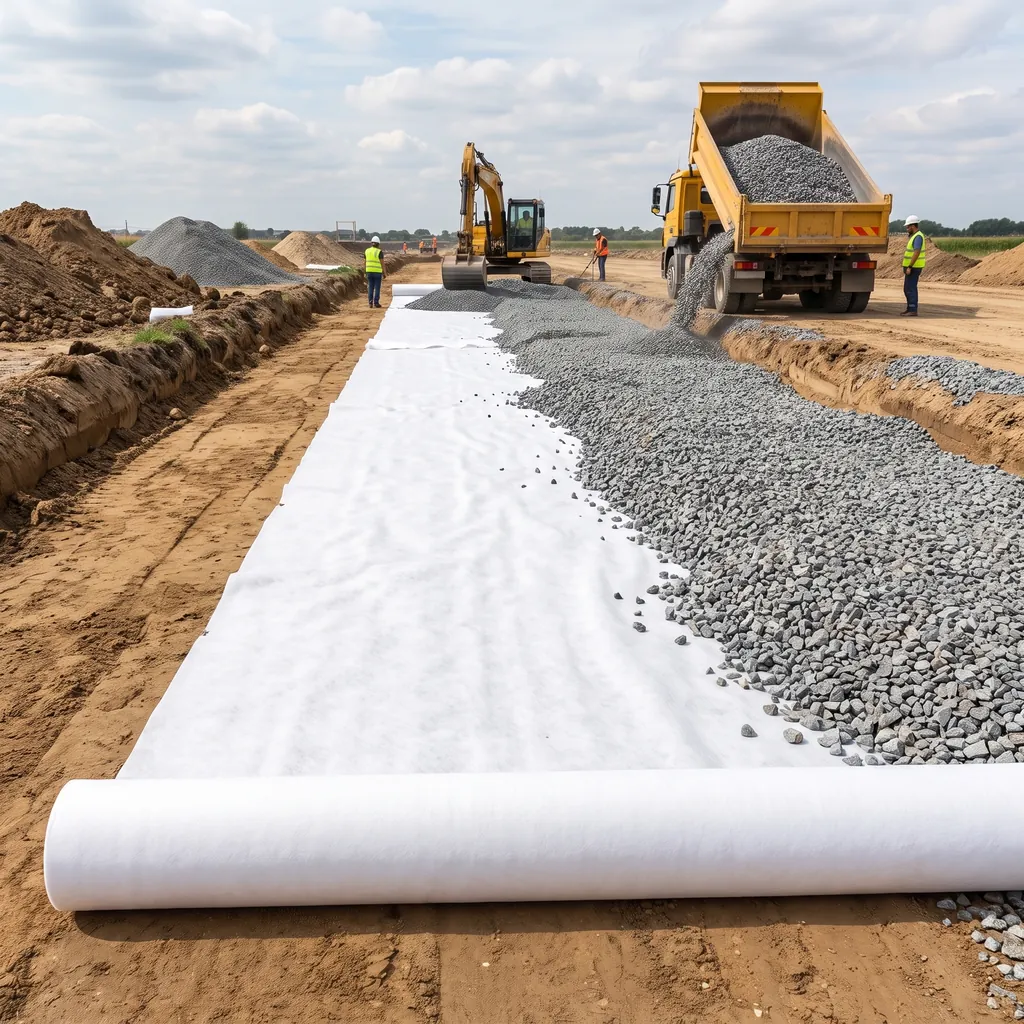
Why lay a geotextile under a road?
Under traffic, the aggregates of the capping layer sink into the subgrade and fine soil particles rise into the aggregates. The layer loses its effective thickness and bearing capacity: ruts and deformations appear.
Laid between the soil and the aggregates, the geotextile provides separation: it is also called an anti-contaminant geotextile. It lets water through, holds back fines and helps spread loads.
Which geotextile for a road?
These figures are indicative: the final choice is made by the design office or the specifications.
| Situation | Recommended product | Indicative figure |
|---|---|---|
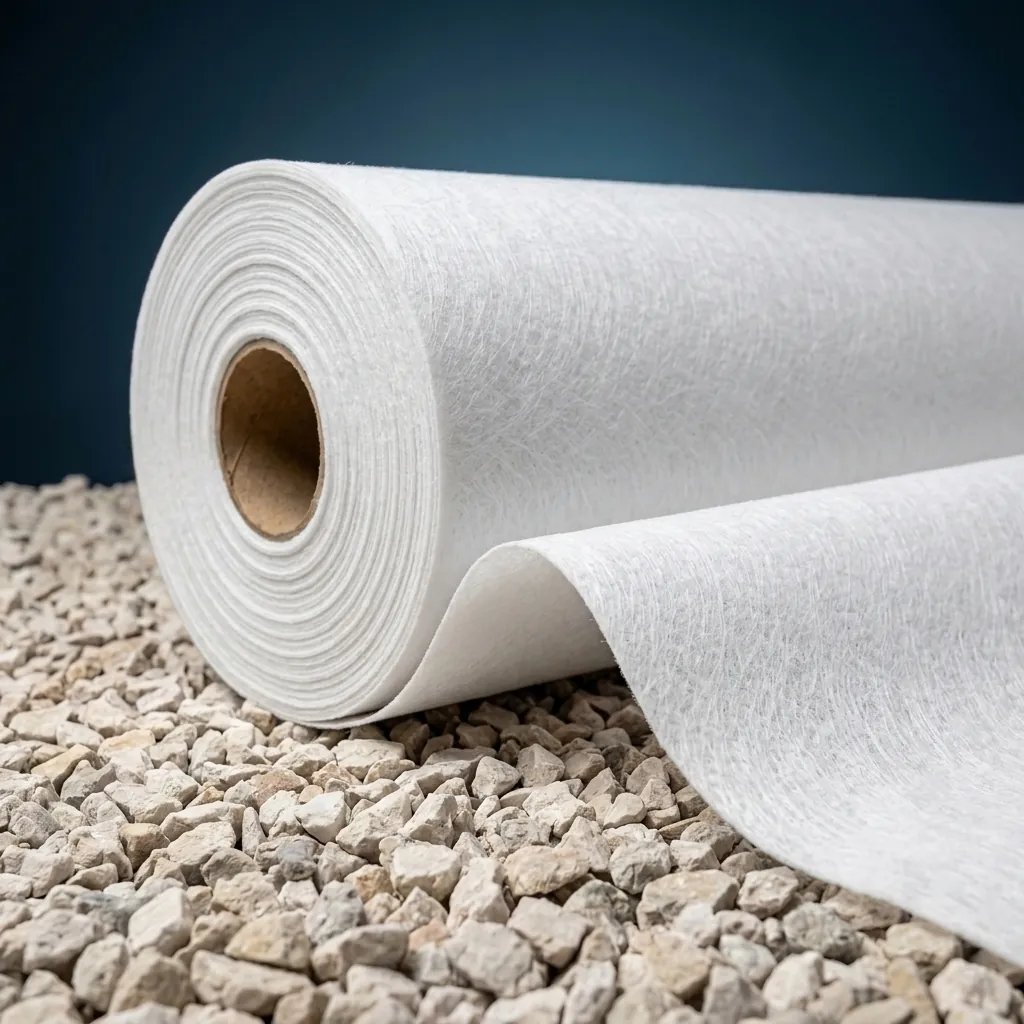
| Track, car park or platform on fair ground | Non-woven geotextile | 200 to 300 g/m² |
| Road, capping layer on clay or wet soil | Non-woven geotextile | 300 to 500 g/m² |
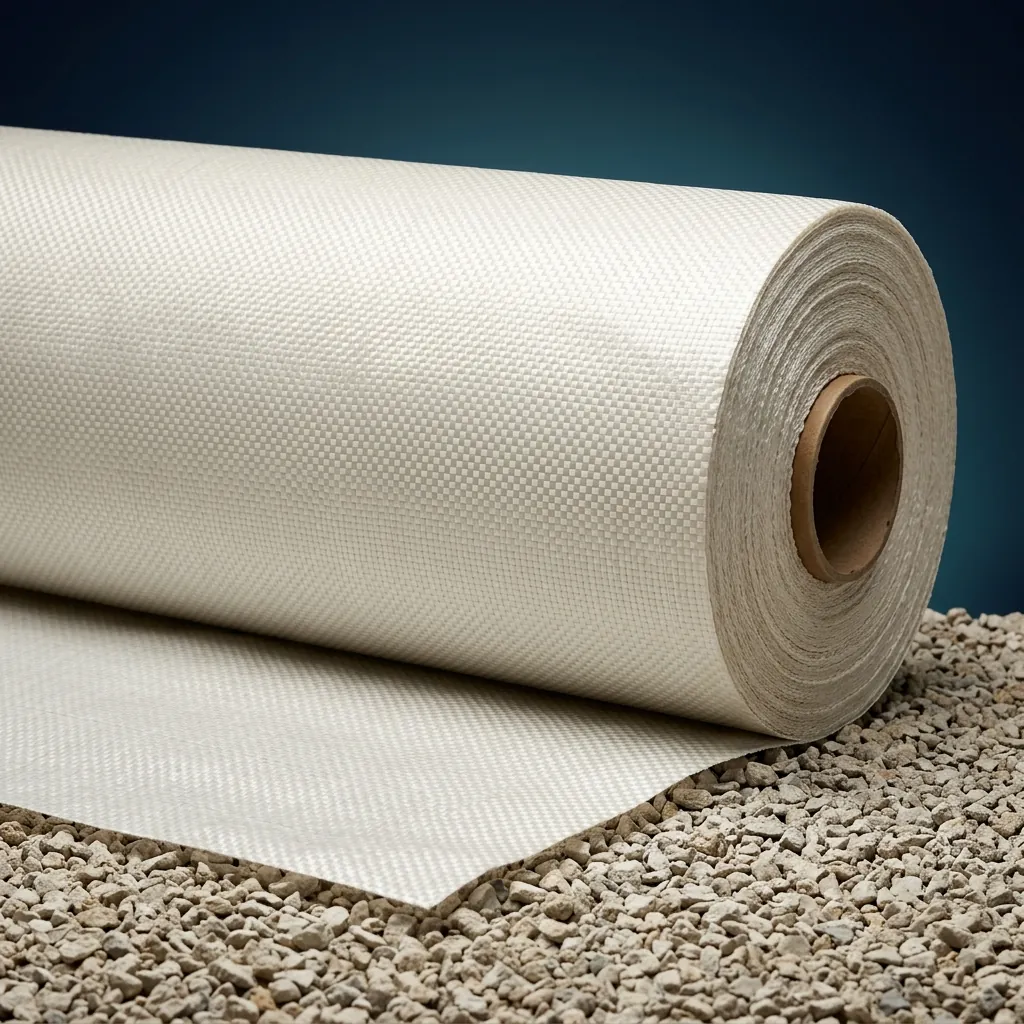
| Soft soil, low bearing capacity, embankment to reinforce | Woven geotextile | 150 or 200 kN/m |
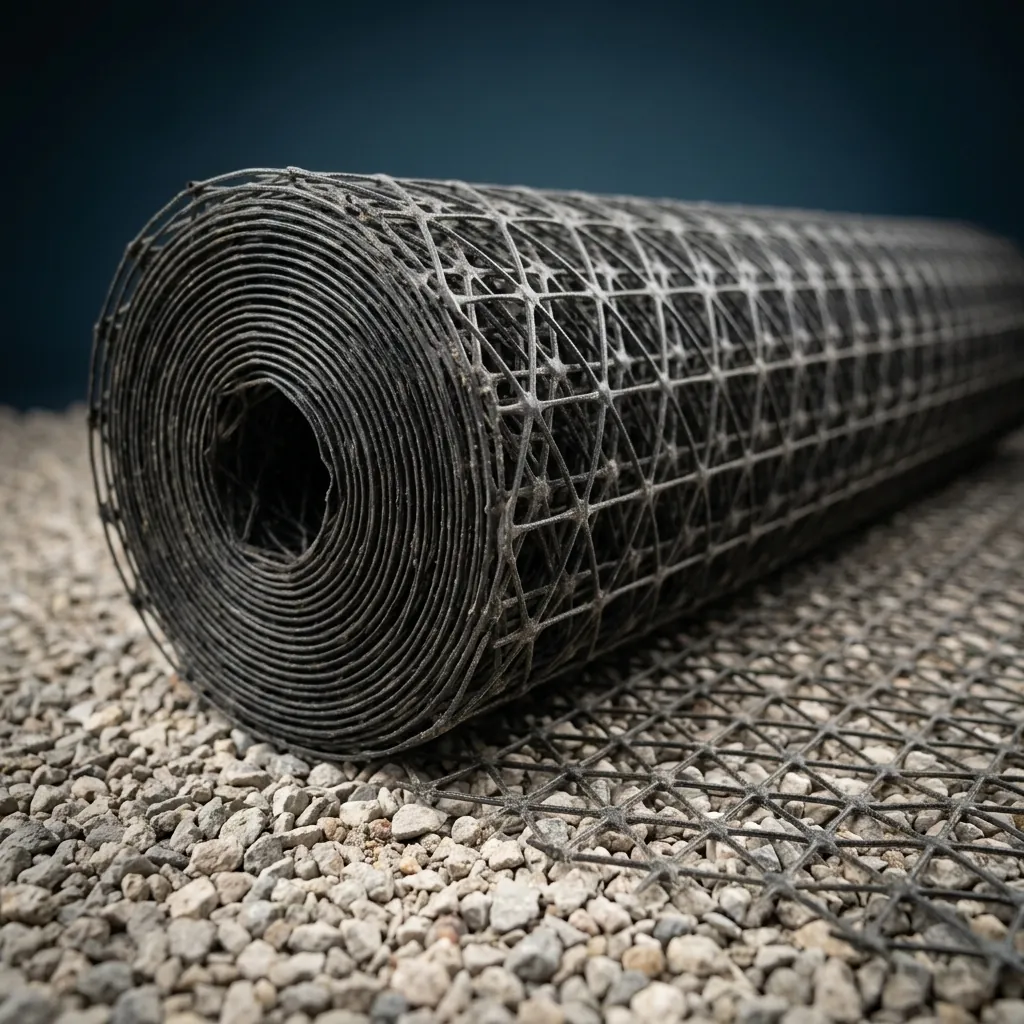
| Granular layer to stabilise under heavy traffic | TX 170 triaxial geogrid | Depending on the design |
Benefits of geotextile under a road
- Keeps the thickness and bearing capacity of the capping layer.
- Limits rutting and deformation of the pavement.
- Makes it easier for plant to move on wet ground during works.
- Extends the life of the road and reduces maintenance.
Installation under a capping layer
- Strip and level the subgrade, remove stones and roots.
- Unroll the geotextile in the direction of work, without creases and without over-tensioning it.
- Allow an overlap of 30 to 50 cm between rolls, more on soft ground.
- Tip the aggregate from the front, without driving directly on the sheet.
- Spread then compact the layer in successive passes.
Suitable products
Frequently asked questions
What geotextile weight for a road?
For a standard capping layer, a non-woven geotextile of 300 to 500 g/m² is generally used. For a track or car park on fair ground, 200 to 300 g/m² is often enough. The exact weight depends on the soil, the aggregates and the traffic: it is set by the design.
Geotextile or geogrid under a road?
The geotextile separates and filters; the geogrid stabilises the aggregate layer by confining it. On fine or wet soil, both are often combined: the geotextile below, the geogrid within the granular layer.
Is a geotextile needed under a gravel track?
Yes, as soon as the subgrade contains fines (clay, silt). Without separation, the gravel sinks and mixes with the soil, and the track deteriorates quickly.
Quote request
Have a project?
Tell us what you need and let’s discuss the right solution.